
 Akshay Dinesh
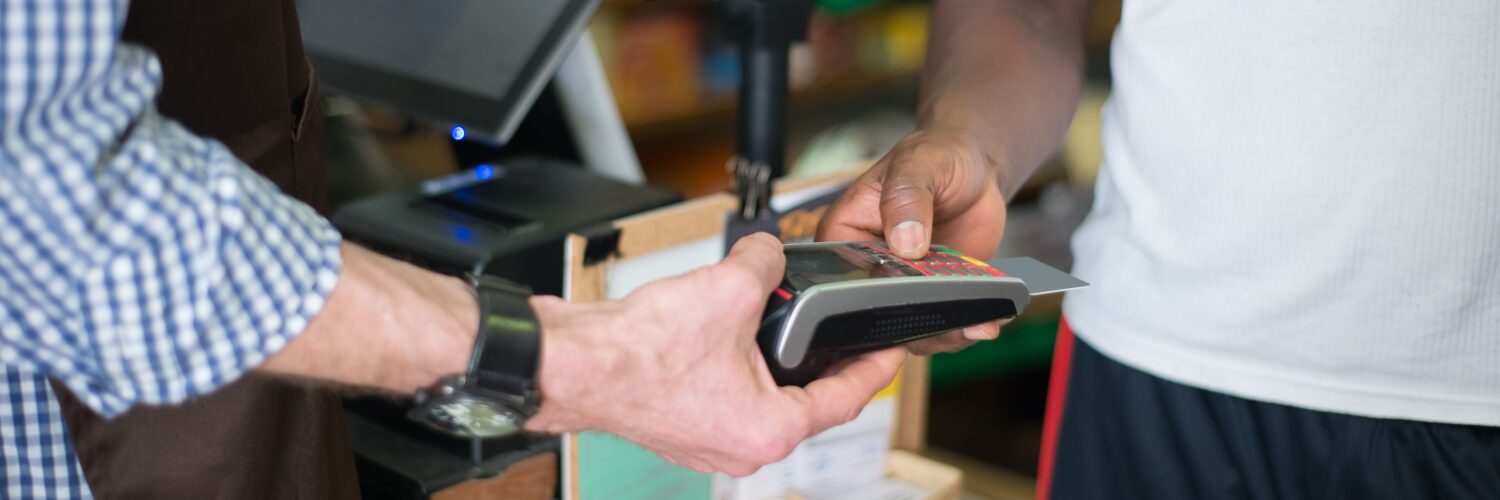
A long string of numbers can look ordinary until one digit is copied wrong. A cashier scans a barcode, a library records an ISBN, a payment form checks a card number, or a warehouse system reads a package label. In each case, the number is not just a label. It often carries a small built-in test that helps a computer notice when something has gone wrong.
That test is called a check digit. It is usually the final digit in an identifier, calculated from the digits that came before it. If someone mistypes one of the earlier digits, the calculation no longer matches the check digit, and the system can reject the number before it causes a larger problem. The idea is simple enough for a classroom example, but it sits behind many everyday systems that need numbers to be copied, scanned, printed, and stored accurately.
A Small Digit With a Job
A check digit is not chosen at random. It is produced by a rule, and the same rule can be run again whenever the number needs to be checked. GS1, the standards organization behind many retail barcode systems, describes the last digit of a barcode number as a calculated digit based on all the other digits. Its purpose is to help confirm that the barcode number has integrity before it is used for identification, ordering, or inventory.
Imagine a product code where the first digits identify the company and item. The last digit does not identify a new feature of the product. Instead, it asks a question: do the other digits still fit the pattern they were supposed to fit? If they do, the number passes the first check. If they do not, the system has a reason to suspect that a digit was missed, swapped, or entered incorrectly.
This is a good example of mathematics doing quiet practical work. The check digit does not understand what a book, package, or card is. It only checks a relationship among digits. That is enough to catch many common mistakes because random errors usually break the relationship.
Why Remainders Are So Useful
The mathematics behind many check digits uses modular arithmetic, which is arithmetic with remainders. Instead of caring about the full value of a sum, the rule cares about what is left after division by a fixed number. Clocks use a familiar version of this idea. If it is 10 o’clock and 5 hours pass, the clock shows 3, not 15, because the count wraps around after 12.
Many check-digit systems wrap around after 10 or 11. A rule might multiply certain digits by weights, add the results, and then ask whether the total lands on a multiple of 10. If it does, the number passes. If it leaves a remainder, the check digit can be chosen to bring the total back to a clean multiple.
For example, suppose a rule adds weighted digits and gets 47 before the check digit is included. The next multiple of 10 is 50, so the check digit would be 3. The complete number now has a total of 50 under that rule. If someone later changes one digit and the total becomes 51, 56, or 42, the number no longer passes.

How an ISBN Checks Itself
Books give a clear example because their identifiers are meant to move through many hands: publishers, bookstores, libraries, distributors, teachers, and readers. The International ISBN Agency explains that ISBNs have been 13 digits since January 1, 2007, and that the final digit mathematically validates the rest of the number. In the 13-digit system, the check digit uses a modulus 10 rule with alternating weights of 1 and 3.
Take the first twelve digits of an ISBN-13. Starting from the left, multiply the digits alternately by 1 and 3, then add the products. The check digit is chosen so that the full weighted total, including the final digit, becomes a multiple of 10. That means the final digit is not just decoration at the end of the ISBN. It is the digit that makes the whole number satisfy the rule.
Here is a compact example using the well-known ISBN prefix 978. Suppose the first twelve digits are 978030640615. The weighted sum is found by alternating 1 and 3 as multipliers: 9, 21, 8, 0, 3, 0, 6, 12, 0, 18, 1, and 15. These add to 93. The next multiple of 10 is 100, so the check digit is 7. The complete ISBN-13 ends in 7 because 93 + 7 = 100.
If one digit is typed incorrectly, the weighted sum usually changes enough that the final digit no longer makes the total a multiple of 10. If the 6 near the end is mistyped as a 5, for instance, the total changes. The number may still look like a normal ISBN to a person, but the arithmetic says something is off.

The Luhn Algorithm and Everyday Number Checks
Another famous check-digit method is the Luhn algorithm, also called a modulus 10 check. It was developed by IBM engineer Hans Peter Luhn and is widely used to validate identification numbers, including many payment-card numbers and IMEI numbers for mobile devices. Its purpose is not to prove that an account is real or that a transaction is safe. It is a quick arithmetic screen for common data-entry mistakes.
The Luhn method works differently from the ISBN-13 rule, but the spirit is similar. Starting from the right, every second digit is doubled. If doubling creates a two-digit number, the two digits are added together, which gives the same result as subtracting 9. Then all the digits are added. A valid number has a total that ends in 0.
A short example shows the pattern. To check 79927398713, double every second digit from the right among the earlier digits, adjust any doubled value above 9, and add everything. The resulting total is 70, which is a multiple of 10, so the number passes the Luhn check. Change one digit and the total will usually stop ending in 0.
This is why a form can sometimes tell that a number has been mistyped before contacting a bank, carrier, or database. The check does not know whether the number belongs to anyone. It only knows whether the digits fit the expected arithmetic pattern. That distinction matters. A check digit can catch many accidents, but it is not a password, encryption method, or proof of identity.
What Check Digits Catch and What They Miss
Check digits are designed around likely human mistakes. A person might press the wrong key, skip a digit, reverse two neighboring digits, or misread a printed number. Good check-digit systems are built so that many of those errors change the remainder and make the number fail the test.
They are especially good at catching single-digit errors. If one digit changes, the weighted sum usually changes too, and the final check no longer works. Some systems also catch many adjacent transpositions, where two neighboring digits switch places. That is helpful because transposition is a common copying mistake: 47 becomes 74, 16 becomes 61, or 09 becomes 90.
No simple check digit catches everything. The Luhn algorithm, for example, catches most single-digit errors and many adjacent swaps, but there are known transpositions it can miss. Other systems use different weights or a different modulus to catch a different range of mistakes. Designers have to balance accuracy, simplicity, and compatibility with existing numbering systems.
That tradeoff explains why check digits are usually one part of a larger system. A barcode scanner still needs the printed bars to be readable. A bookstore still needs the ISBN to point to the correct edition. A payment system still needs stronger security checks beyond arithmetic. The check digit is a fast first guardrail, not the whole road.
Why This Belongs to Number Theory
Check digits show that number theory is not only about prime numbers, proofs, or abstract puzzles. It is also about making whole-number patterns useful in daily life. Remainders, multiples, weights, and divisibility rules become tools for detecting small errors before they spread through a system.
The clever part is that the extra information is tiny. One digit can carry enough structure to reject many wrong numbers. That makes check digits efficient for printed labels, databases, forms, and scanners because they add protection without making identifiers much longer or harder to use.
They also give students a concrete reason to care about modular arithmetic. When a total needs to land on a multiple of 10, the remainder tells you exactly what digit is missing. When a number fails the test, the remainder becomes a warning signal. The same idea that makes clocks wrap around after 12 helps barcodes, ISBNs, and identification numbers catch mistakes in the real world.
The next time a long number is accepted instantly or rejected before it goes any further, there may be a small piece of arithmetic working behind the scenes. A check digit cannot make a system perfect, but it can make ordinary mistakes much easier to find. For one quiet digit at the end of a number, that is a surprisingly useful job.



Add comment