
 Akshay Dinesh
A regular derivative answers a tidy question: if one input changes, how fast does the output change? Many real situations are not that tidy. Temperature depends on latitude, altitude, season, and time of day. The cost of a meal depends on the number of guests, the menu, service fees, and taxes. The height of a landscape depends on both east-west and north-south position. When more than one input can change, a single derivative is no longer enough.
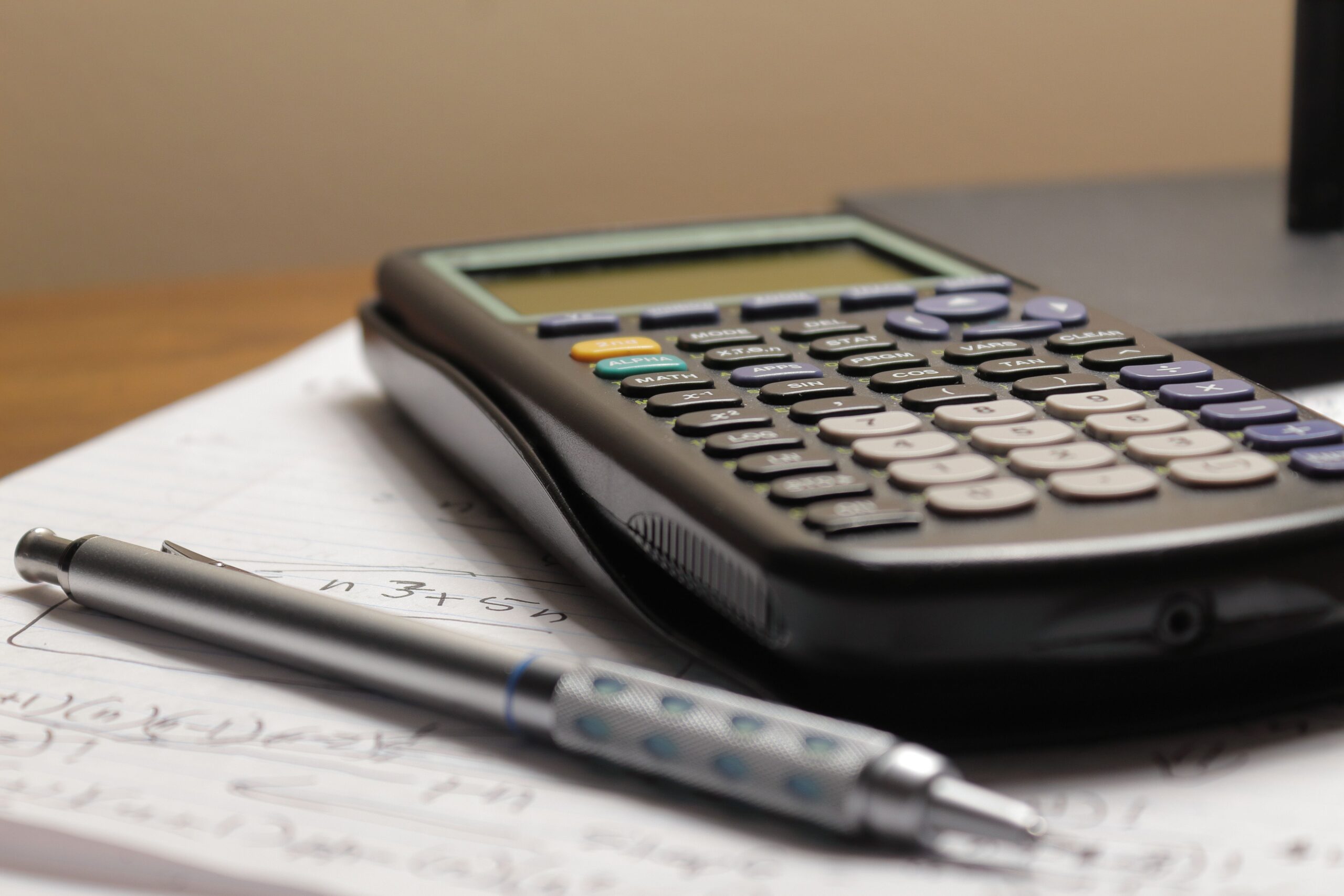
Partial derivatives bring the idea of slope into that wider world. Instead of asking how a function changes when everything moves at once, a partial derivative asks what happens when one input changes while the other inputs are held steady. That one-direction-at-a-time habit may sound like a small technical rule, but it is what makes multivariable change readable instead of overwhelming.
Why One Derivative Is Not Enough
Imagine a surface described by a function such as \(z=f(x,y)\). The output \(z\) might be elevation, temperature, profit, pressure, brightness, or any quantity that depends on two inputs. The point \((x,y)\) tells you where you are on the input plane, and the value of \(f(x,y)\) tells you the height of the surface above that point. If you stand on a hill, the slope you feel depends on which way you walk.
Walking east might be steep, while walking north might be nearly flat. A path that angles northeast could climb at a different rate from either of those two simple directions. This is why a multivariable function does not have just one obvious slope. It has many possible rates of change, each tied to a direction.
The partial derivative with respect to \(x\), written \(f_x\) or \(\frac{\partial f}{\partial x}\), measures change in the \(x\)-direction. The partial derivative with respect to \(y\), written \(f_y\) or \(\frac{\partial f}{\partial y}\), measures change in the \(y\)-direction. The curved symbol \(\partial\) signals that the derivative belongs to a function with more than one input, where the other inputs are being treated as fixed for the moment.
This idea shows up in standard multivariable calculus courses before directional derivatives and gradients. First you learn to read the surface along the coordinate directions. Later, those separate slopes can be combined to describe movement in any direction, which is where the gradient becomes powerful.
Holding One Variable Still
The most important phrase in partial derivatives is “hold the other variable constant.” That means you temporarily pretend the other input is just a number. If \(f(x,y)=x^2+3xy+y^2\), then finding \(\frac{\partial f}{\partial x}\) means treating \(y\) like a constant while differentiating with respect to \(x\). The result is \(2x+3y\), because \(x^2\) becomes \(2x\), \(3xy\) becomes \(3y\), and \(y^2\) becomes \(0\) when \(y\) is not changing.
Finding \(\frac{\partial f}{\partial y}\) asks a different question. Now \(x\) is held still, and \(y\) is allowed to move. The same function gives \(3x+2y\). Both answers are correct because they describe different slices through the same surface.
A useful way to picture this is to imagine cutting the surface with a vertical plane. If you hold \(y\) fixed, you slice the surface in a direction parallel to the \(x\)-axis and look at the slope of the curve created by that cut. If you hold \(x\) fixed, you slice it the other way. Each partial derivative turns a two-input surface into a one-variable curve long enough to measure slope.
The notation can make the process feel more mysterious than it is. The ordinary derivative still does the actual work. The new skill is deciding which symbols are changing and which symbols are parked in place.
A Worked Example With Meaning
Suppose a simple model estimates the temperature on a hillside by \(T(x,y)=80-2x-3y\). Let \(x\) measure miles east from a trailhead and \(y\) measure hundreds of feet of elevation gain. This model is not trying to capture every detail of weather. It is a clean way to separate two kinds of change: moving across the map and moving upward.
The partial derivative with respect to \(x\) is \(\frac{\partial T}{\partial x}=-2\). In this model, moving one mile east lowers the temperature by 2 degrees when elevation is kept the same. The partial derivative with respect to \(y\) is \(\frac{\partial T}{\partial y}=-3\). Climbing one hundred feet lowers the temperature by 3 degrees when east-west position is kept the same.
The signs matter. A negative partial derivative means the output decreases as that input increases. A positive partial derivative would mean the output increases. A zero partial derivative would mean that, at least in that direction and at that point, the output is not changing.
Real models are often less perfectly straight. If \(P(x,y)=100+4x-0.5x^2+2y\) estimates profit from advertising \(x\) and price adjustment \(y\), then \(\frac{\partial P}{\partial x}=4-x\). The effect of more advertising depends on the current value of \(x\). Early advertising may raise profit, but once \(x\) gets large enough, the partial derivative can shrink to zero or become negative. That is a mathematical way to describe diminishing returns.
From Partial Derivatives to the Gradient
Once the partial derivatives are known, they can be collected into a vector. For a two-variable function, the gradient is written \(\nabla f=\langle f_x, f_y \rangle\). It packages the two coordinate-direction slopes into one object. If \(f_x\) and \(f_y\) are the ingredients, the gradient is the organized recipe for local change.
The gradient points in the direction where the function increases fastest. Its length tells how steep that fastest increase is. This is a compact idea, but it explains why gradients appear in physics, machine learning, economics, engineering, and maps of elevation or temperature. Whenever a quantity depends on several inputs, the gradient helps identify the direction that changes it most quickly.
For the function \(f(x,y)=x^2+3xy+y^2\), the gradient is \(\nabla f=\langle 2x+3y, 3x+2y \rangle\). At the point \((1,2)\), this becomes \(\langle 8,7 \rangle\). That vector says the surface is increasing in a direction with a strong positive \(x\) component and a strong positive \(y\) component near that point.
The gradient also connects partial derivatives to directional derivatives. A directional derivative asks how fast the function changes if you move in a chosen unit direction \(\mathbf{u}\). The formula \(D_{\mathbf{u}}f=\nabla f\cdot\mathbf{u}\) shows that the gradient contains the information needed to measure change along angled paths, not just east-west or north-south slices.
Common Mistakes That Change the Meaning
One common mistake is treating every variable as if it changes at the same time. In \(\frac{\partial}{\partial x}(3xy)\), the answer is \(3y\), not \(3x+3y\). The variable \(y\) is not being differentiated in that step. It is acting like a constant multiplier.
Another mistake is reading a partial derivative as a full prediction. If \(\frac{\partial T}{\partial y}=-3\), that does not mean every real climb of one hundred feet must drop the temperature by exactly 3 degrees. It means the model, at that point and under the hold-everything-else-steady condition, gives that local rate of change. Partial derivatives are precise about the question they answer, and weaker when used to answer a different question.
Students also sometimes forget that partial derivatives can depend on location. A flat-looking area of a surface may have small partial derivatives, while a nearby ridge may have large ones. In curved models, the slope at one point is not automatically the slope everywhere.
A good check is to translate the notation into a sentence. \(\frac{\partial f}{\partial x}\) means “how \(f\) changes as \(x\) changes, with the other inputs held fixed.” If that sentence does not match the calculation, the work needs another look.
Why Partial Derivatives Matter Beyond the Formula
Partial derivatives are useful because they let complicated systems be studied one controlled change at a time. A meteorologist can ask how pressure changes with altitude while keeping horizontal position fixed. An economist can ask how cost changes with labor while holding materials steady. A designer can ask how brightness changes across a screen in one direction before studying the full image.
This does not mean real systems are simple. Inputs often interact, and changing one factor may eventually affect the others. Partial derivatives are not a denial of that complexity. They are a way to begin with a clean local question before moving toward richer models.
That is why the concept becomes a bridge. It starts as a familiar derivative with extra notation, then grows into gradients, tangent planes, optimization, and models with many variables. The habit stays the same: decide what is changing, decide what is fixed, and read the local rate carefully.
When partial derivatives finally click, multivariable calculus feels less like a new language and more like an expansion of slope. A curve has one main direction to follow. A surface gives you choices. Partial derivatives help you read those choices one direction at a time.



Add comment