

 Akshay Dinesh
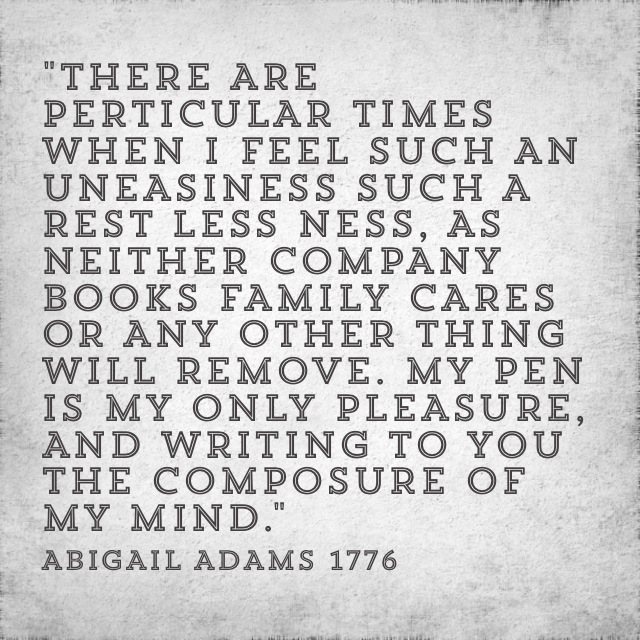
In the spring of 1776, independence was moving from a dangerous idea toward a political decision. John Adams was in Philadelphia with the Continental Congress, while Abigail Adams remained in Massachusetts, managing family responsibilities, wartime uncertainty, illness, shortages, and the emotional strain of separation. Their letters carried household news, political judgment, military updates, and sharp arguments about the future. One line from Abigail’s March 31 to April 5 letter became famous because it asked a question the Revolution was not ready to answer: if Americans were going to reject tyranny, would they also challenge the power husbands held over wives?
Abigail did not write a formal political pamphlet. She wrote to her husband in the middle of ordinary wartime worries, then turned suddenly toward the laws that might follow independence. The Massachusetts Historical Society preserves the original letter, and the phrase most often remembered is simple: “Remember the Ladies.” Its force comes from the timing. The colonies were preparing new governments, state constitutions, and legal arrangements. Abigail saw that a revolution against arbitrary power could still leave women legally dependent inside their own homes.
A private letter with a public argument
The letter began in a world that felt unstable. British troops had evacuated Boston only weeks earlier. Disease and military danger were still close. Abigail was not writing from a quiet distance; she was living through the war while John helped shape its political direction. That is part of what makes the letter more than a memorable quotation. It shows how politics entered kitchens, farms, bedrooms, and family decisions long before it appeared in formal declarations.
Her request was also carefully aimed. She did not ask John to add women to a single document or to give a campaign speech on her behalf. She pointed to the broader legal order that would come after independence. New governments would need new laws. If those laws copied the old assumptions about marriage, property, authority, and obedience, the Revolution would be less radical than its language suggested.
Abigail’s warning was not abstract. Under the English common-law tradition known as coverture, a married woman’s legal identity was often absorbed into her husband’s. The exact rules varied by colony and circumstance, but the basic pattern gave husbands extensive control over property, contracts, wages, and legal representation. A wife could be economically active, intellectually forceful, and politically aware, yet still face laws that treated her independence as limited once she married.
Why coverture made the request urgent
To understand Abigail’s point, it helps to see the connection she made between political tyranny and domestic power. Patriot leaders argued that Parliament and the king had placed the colonies under authority without proper consent. Abigail applied that logic closer to home. If laws gave husbands nearly unchecked authority, then marriage could become another place where power was exercised without meaningful representation.
That comparison was bold because it used Revolutionary language against one of the Revolution’s own blind spots. Many male Patriots could condemn royal power while accepting household hierarchy as natural. Abigail did not pretend the two questions were identical, but she saw the danger in celebrating liberty while leaving one large group outside the legal imagination. Her line about remembering women was not a decorative appeal for kindness. It was a challenge to build the new political order with fewer inherited injustices.
Modern readers sometimes compress the letter into a simple demand for voting rights. That misses the texture of the moment. Abigail was not laying out a modern suffrage platform in 1776. Her concern was broader and more immediate: women needed legal protection, education, respect, and limits on male power. She wanted the new laws to be more generous than the old ones. In her world, that alone was a serious challenge.
The strongest part of the argument is that it did not depend on sentiment. Abigail was not saying women deserved better treatment because they were gentle or morally superior. She was saying power should be restrained because human beings misuse it. That was a Revolutionary idea. She simply refused to leave it at the front door.
John Adams’s reply showed the limits of the Revolution
John Adams answered with affection, humor, and dismissal. He treated the request as part of a wider wave of challenges to authority, joking that children, apprentices, schools, and others were becoming difficult to govern. His reply matters because it reveals the boundary many founders placed around revolutionary change. They could imagine independence, republican government, and written constitutions, but most could not yet imagine women as legal and political equals.
That does not mean John ignored Abigail’s intelligence. Their correspondence shows that he respected her judgment and depended on her observations. She commented on politics, war, public opinion, and family finances with unusual clarity. Still, respect inside a marriage did not automatically become equality under law. The gap between private admiration and public rights is one of the hardest parts of the founding era to understand honestly.
The exchange also reminds us that revolutions do not change every assumption at once. The American Revolution opened arguments about consent, representation, natural rights, and written constitutions. It did not settle who counted fully within those ideas. Enslaved people, free Black communities, Native nations, propertyless men, and women all encountered the limits of Revolutionary liberty in different ways. Abigail’s letter belongs in that larger story because it exposed the incompleteness of the promise while the promise was still being written.
Women were already acting politically
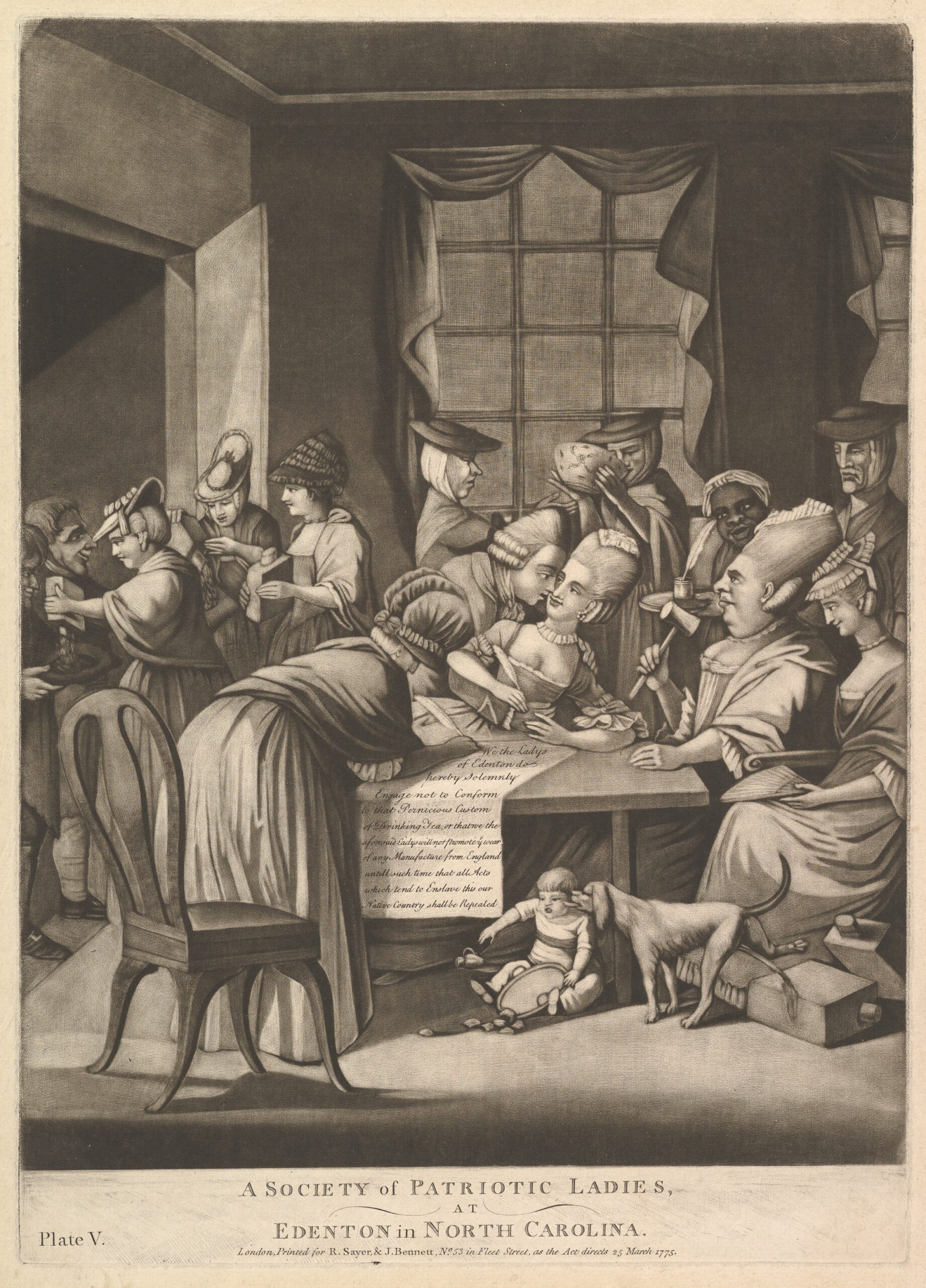
Abigail’s appeal did not come from nowhere. Women had already participated in the Revolutionary crisis through boycotts, household production, fundraising, political conversation, intelligence networks, and public protest. The 1774 Edenton Tea Party in North Carolina, for example, brought women together to support a boycott of British goods. A 1775 British satirical print mocked those women, which shows how unsettling female political action could appear to observers who expected politics to remain male.
Boycotts made women’s political role especially visible because household purchasing was not a trivial matter. Tea, cloth, imported goods, and home production connected family decisions to imperial policy. When women refused certain goods or supported homespun cloth, they helped turn political resistance into daily practice. They did not need a vote to influence the movement, but influence without rights remained fragile. Abigail understood that difference.
The same tension appeared in education. Abigail had received no formal schooling equal to what boys of her class might have expected, yet she became one of the sharpest political correspondents of the founding generation. She argued repeatedly that women’s minds should not be neglected. Education mattered because legal dependence was strengthened by intellectual dependence. A society that trained women only for obedience could then claim women were unprepared for wider responsibility.
What the letter changed, and what it did not
The immediate political result was limited. The new state governments did not broadly rewrite marriage law in the way Abigail hoped. Most women remained outside formal political rights for generations. Married women’s property reforms developed slowly in the nineteenth century, and women’s suffrage became a long, difficult movement that reached a national constitutional victory only in 1920. Abigail’s letter did not create those changes by itself.
Its importance lies elsewhere. The letter preserved a founding-era argument that later readers could return to. It showed that the contradiction between liberty and women’s legal dependence was visible at the time, not something invented only by later historians. Abigail Adams knew the Revolution’s language well enough to test it. She asked whether new laws would merely replace one form of authority with another.
That is why the phrase has lasted. It is short enough to remember, but the idea behind it is demanding. Remembering the ladies meant more than including women politely in patriotic memory. It meant asking how law distributes power, whose consent matters, and whether a society can call itself free while treating dependence as natural for half its people.
Abigail Adams wrote as a wife, mother, wartime manager, political observer, and citizen in everything but the formal legal sense. Her letter did not solve the founding era’s contradictions. It made one of them impossible to miss. In a moment when Americans were preparing to claim liberty for themselves, she asked them to notice who might still be left under someone else’s rule.





Add comment