
 Akshay Dinesh
A melody can move beautifully for several measures, but listeners usually know when it has reached a resting point. Something in the harmony, rhythm, and melodic shape tells the ear, “that thought is complete,” or just as often, “wait, there is more coming.” In music theory, that feeling is called a cadence.
Cadences work a little like punctuation in speech. A strong cadence can feel like a period at the end of a sentence. A weaker one can feel like a comma, a question mark, or a breath before the next idea. Once you start listening for cadences, you hear them everywhere: in hymns, pop choruses, classical symphonies, film scores, jazz standards, and even simple classroom songs.
A cadence is where musical motion settles
A cadence is not just any two chords placed next to each other. It is a musical arrival point, usually at the end of a phrase. The harmony matters, but so does the timing. A V chord moving to I may create a strong ending when it lands at the right moment, but the same chord motion in the middle of a busy line may not feel like an ending at all.
That is why cadences are best understood by listening to whole phrases. Imagine singing a short tune and stopping after a point where the music feels balanced. The final note may be longer, the rhythm may slow down, and the harmony may land on a chord that sounds stable. Those clues work together to tell the ear that the phrase has reached a resting place.
In tonal music, especially music built around major and minor keys, cadences often depend on the relationship between the dominant chord and the tonic chord. The tonic is the home chord of the key, often labeled I in Roman numeral analysis. The dominant, labeled V, creates tension because it points strongly back toward that home chord. Much of Western harmony uses that pull away from home and back again to shape musical time.
Cadences are also part of phrasing. A singer needs places to breathe. A pianist needs to know where one musical idea relaxes before the next one begins. A listener may not know the chord names, but the ear still notices whether the music has landed, paused, or dodged the expected ending.
Authentic cadences sound like strong arrival
The authentic cadence is the most direct kind of tonal ending. It moves from the dominant chord to the tonic chord, usually V to I in a major key or V to i in a minor key. That motion has a clear sense of release: the dominant asks for resolution, and the tonic answers.
A perfect authentic cadence is the strongest version. In classroom terms, it usually means the music moves from V to I, both chords are in root position, and the highest voice ends on the tonic note. The details can sound technical, but the effect is simple: the phrase feels firmly closed. It is the kind of ending that can make a hymn verse, a classical phrase, or a simple song line sound complete.
An imperfect authentic cadence still moves from dominant to tonic, but something softens the finality. Maybe one of the chords is inverted, or the melody does not end on the tonic note. The music still arrives, but it may feel less absolute. It can close a smaller phrase inside a larger passage, leaving room for the piece to keep developing.
Authentic cadences are powerful because they confirm the key. If a piece has wandered through different chords, the return from V to I reminds the ear where home is. That is why music theory texts often treat authentic cadences as central to tonal harmony: they do not simply end a phrase; they help define the center of the music.
Half cadences leave the ear waiting
A half cadence ends on the dominant chord. Instead of resolving tension, it stops while the tension is still active. In Roman numerals, many different chords can lead to V, but the important part is that the phrase pauses on V rather than continuing to I.
The effect is easy to hear if you sing a short line that stops just before it feels finished. A half cadence often sounds like a musical comma. It gives the listener a resting point, but not a final answer. The phrase seems to ask for a response, and in many songs and classical pieces, the next phrase supplies one with a stronger cadence.
This question-and-answer feeling is one reason half cadences are common in balanced phrase pairs. The first phrase may end on V, leaving the music open. The second phrase may answer with an authentic cadence, bringing the larger thought to rest. Even without technical language, listeners often sense that the first ending is temporary and the second is more complete.
Half cadences are especially useful for building momentum. If every phrase ended with full closure, the music could feel too squared off. By pausing on the dominant, a composer or songwriter can keep energy in the air. The listener gets a breath, but not a full stop.
Plagal and deceptive cadences change the expected path
The plagal cadence moves from IV to I. Many listeners know its sound from the traditional “Amen” ending in hymns, where the harmony settles gently rather than dramatically. Compared with the authentic cadence, the plagal cadence often feels warmer and less forceful. It still reaches the tonic, but it does not create the same dominant-to-tonic snap.
That gentler quality makes plagal motion useful after a stronger ending. A piece may land with an authentic cadence, then add a plagal gesture as a final confirmation. In that setting, IV to I can feel less like the main door closing and more like the room becoming quiet afterward.
A deceptive cadence does something different. It sets up the listener to expect V to I, then moves somewhere else, often V to vi in a major key. The ear hears the dominant and anticipates home, but the music turns aside at the last moment. The result is not random; it is a controlled surprise.
Deceptive cadences are useful because they extend a phrase without simply repeating it. A songwriter can delay the chorus landing. A composer can make a climactic moment feel more emotional by refusing the expected release. The listener feels the pull toward home, then notices that the music has chosen a different route.
Cadences shape how listeners follow musical form
Cadences help organize music into phrases, sections, and larger forms. In a short folk song, they may mark the ends of lines. In a sonata movement, they may help establish a key, confirm a new key area, or close a major section. In a pop song, they may shape the difference between verse, pre-chorus, chorus, and bridge.
They also affect expectation. If a verse keeps ending with open cadences, the chorus can feel more satisfying when it finally lands strongly. If a film score avoids full closure during a tense scene, the audience may feel suspended even before noticing the harmony. Cadences give musical time a direction: tension gathers, relaxes, returns, or delays.
For students, the most useful habit is to connect chord labels with sound. Roman numerals matter because they reveal patterns across keys, but cadence recognition begins with the ear. Does the phrase sound finished? Does it sound paused? Did it seem ready to land and then turn away? Those questions often lead to the right analysis before the chord names are fully clear.
Cadences can also make performance more expressive. A pianist might slightly shape the timing into a cadence. A singer might breathe after a half cadence but give more weight to a final authentic cadence. A conductor might show the ensemble whether an ending should feel open, firm, gentle, or surprising. The theory becomes practical when it changes how the music is played.
How to start hearing cadences
A good way to practice is to listen to short phrases and pause after each one. Ask whether the ending feels complete or incomplete. Then listen again for the bass movement and the final chord. If the music seems to move from dominant to tonic with strong closure, it may be an authentic cadence. If it stops on the dominant and seems to need an answer, it may be a half cadence.
Next, listen for endings that feel softer or unexpected. A gentle IV to I motion may suggest a plagal cadence, especially in hymn-like or reflective music. A dominant chord that seems ready to resolve but slips to another chord may signal a deceptive cadence. The goal is not to label everything instantly. The goal is to train the ear to notice different kinds of arrival.
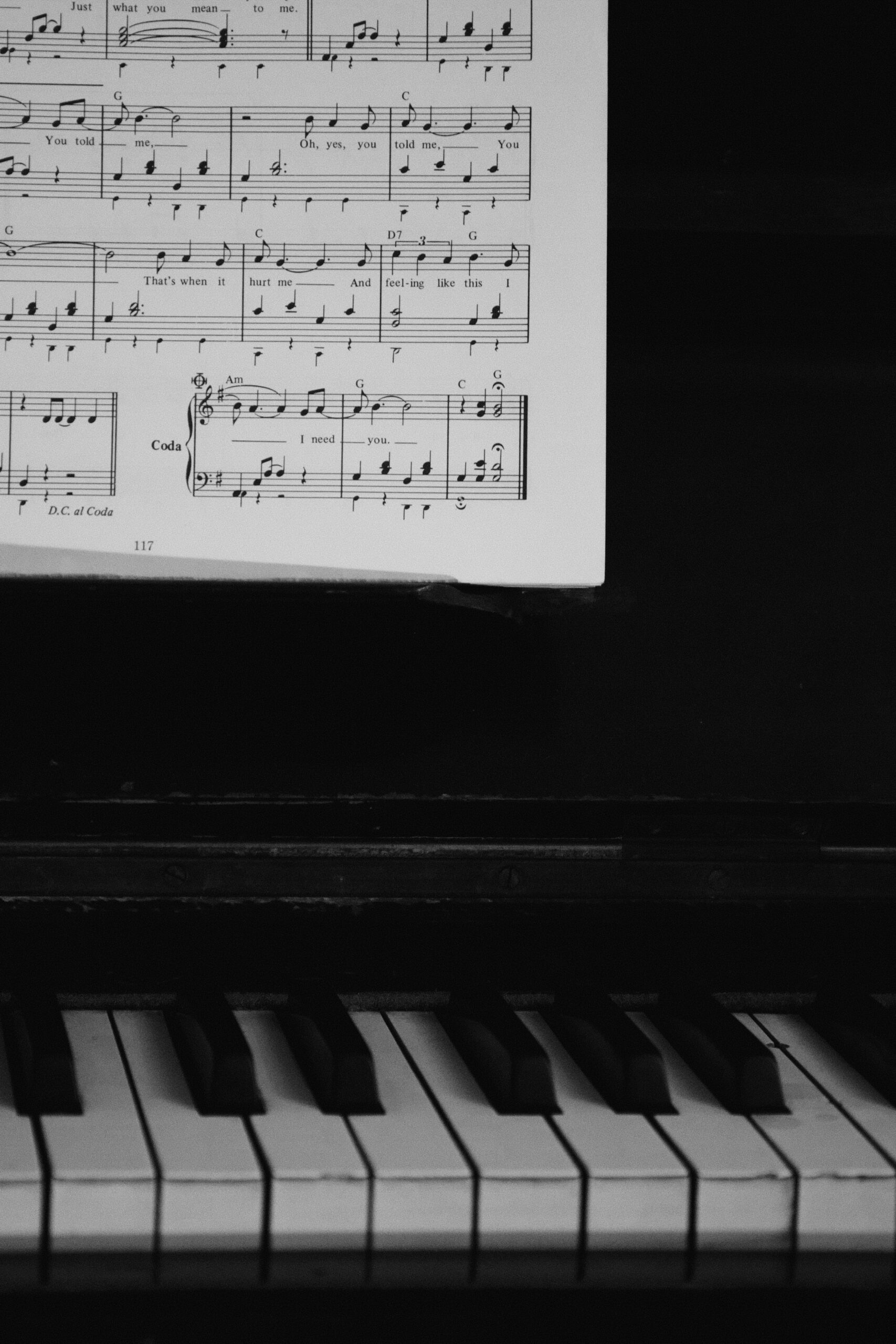
Written music adds another layer. Look for phrase endings, longer notes, rests, repeated patterns, and harmonic rhythm that slows near an arrival point. Cadences often appear where melody, rhythm, and harmony all agree that something has ended or paused. When those clues do not agree, the cadence may feel weaker, interrupted, or deliberately ambiguous.
Cadences are small moments, but they carry a lot of meaning. They tell listeners when to relax, when to expect more, and when the music has taken a surprising turn. Learning to hear them makes music less like a stream of notes and more like a language of tension, motion, and arrival.




Add comment