
 Akshay Dinesh
A blank mind during a test can feel mysterious and unfair. You studied, recognized the topic, and maybe even explained it clearly the night before. Then the question appears, the clock keeps moving, and the answer seems to disappear. That moment is not simply a lack of knowledge. It is often what happens when pressure, attention, memory, and the body’s stress response all compete for the same limited mental space.
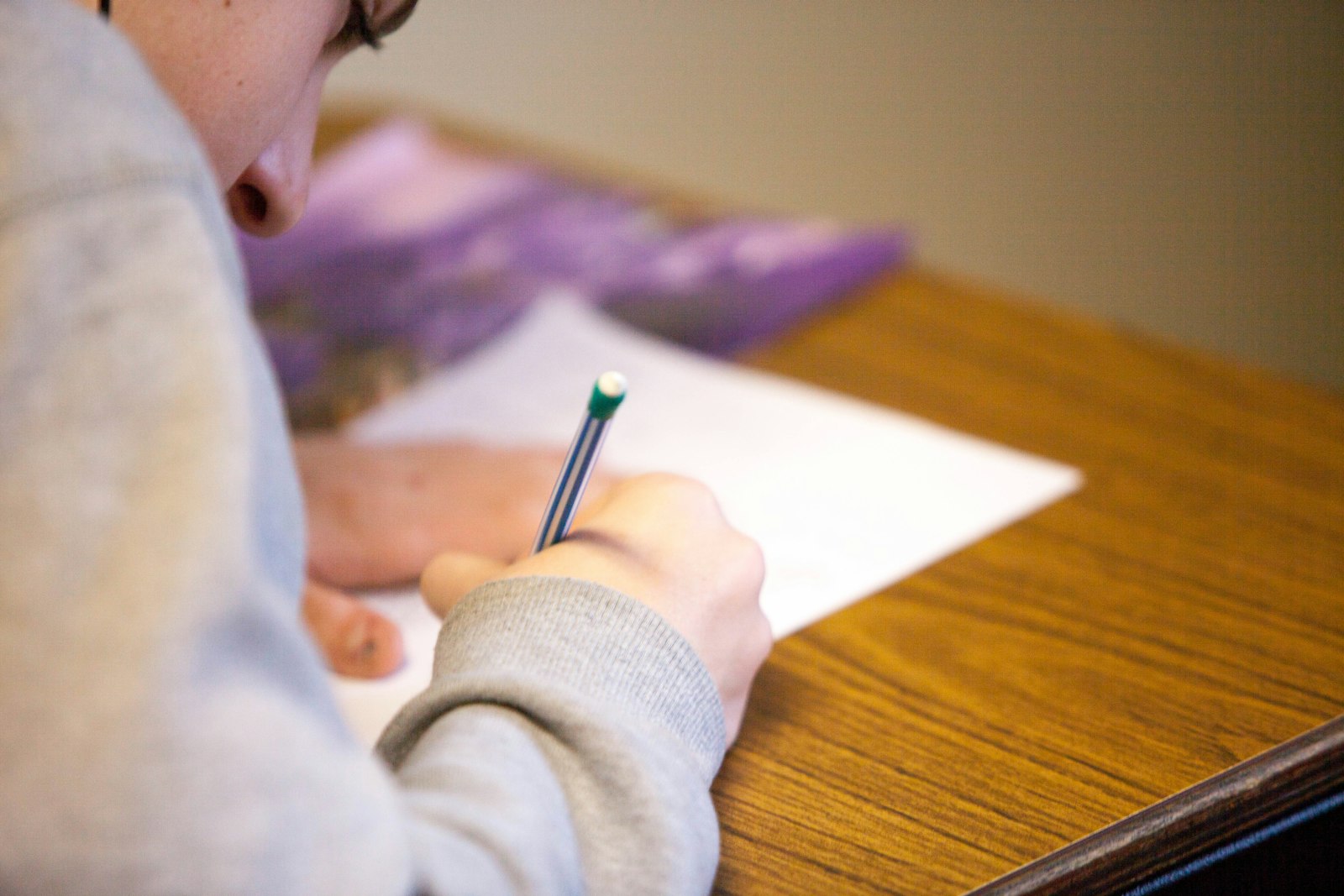
The experience is common because testing asks the brain to do several difficult things at once. A student has to read carefully, hold details in mind, retrieve stored knowledge, choose a method, monitor time, and control worry. When the stakes feel high, the brain may treat the situation less like a normal homework problem and more like a threat that needs immediate attention. That shift can make familiar information harder to reach, especially when the test question requires several steps.
What It Means to Go Blank
Going blank does not usually mean the information has been erased. More often, the problem is access. The memory may still be stored, but the cues that normally help bring it forward are not working well in that moment. A student might remember the first line of an essay later in the hallway, or solve the same math problem easily after the test ends, because the pressure has dropped and the brain can search more normally.
This is one reason a blank mind can feel so strange. It is not the same as never learning the material. It feels more like standing in front of a locked door while knowing the key exists somewhere. The more urgently a student tries to force the answer, the louder the panic becomes, and the harder it can be to notice the smaller clues that would normally lead back to the memory.
Tests also change the context in which recall happens. Studying may happen at home, with notes nearby, music in the background, and no clock counting down. Testing happens in a quieter room, under rules, with a grade attached. If practice has mostly involved rereading or recognizing correct answers, the test may be the first time the brain has to retrieve the information without support. That can expose a gap between familiarity and flexible recall.
Pressure Uses Up Working Memory
Working memory is the mental workspace used to hold and manipulate information for a short time. It is what helps a student keep the beginning of a sentence in mind while finishing the paragraph, track steps in a multi-part equation, or compare two answer choices. It is useful, but it is limited. When too many demands crowd into it, something has to give.
Test anxiety adds extra demands to that workspace. Worries such as “What if I fail?” or “Everyone else is moving faster” are not just feelings in the background. They take attention. They make the brain monitor the situation, scan for danger, and imagine consequences at the same time it is supposed to solve the problem. Research on pressure and academic performance, including work by psychologists Sian Beilock and Thomas Carr on choking under pressure in math, has shown that pressure can interfere especially with tasks that depend heavily on working memory.
This is why blanking often happens on questions that require careful thinking, not just memorized facts. A student may remember a formula but lose track of which number goes where. Another may know the structure of an essay but freeze when trying to organize the first sentence. The knowledge is not gone; the workspace needed to use it is crowded.
The Body Can Treat a Test Like a Threat
When a test feels threatening, the body may react with a faster heartbeat, shallow breathing, tight muscles, sweaty hands, or a restless feeling. Those reactions are part of a normal stress system designed to prepare a person to respond quickly. A little alertness can help. Too much can make careful recall harder because the brain starts prioritizing urgency over accuracy.
The old idea often called the Yerkes-Dodson law describes this pattern in a simple way: performance can improve with moderate arousal, but too much pressure can reduce performance, especially on difficult tasks. A spelling quiz, a timed math section, and a chemistry test do not all need the same level of calm. The more complex the task, the more useful it is to keep attention steady instead of letting stress take over the whole room.
Physical symptoms can also become a second test. A student notices a racing heart, then worries about the racing heart, then worries that the worry means failure is coming. That loop pulls attention away from the question. Naming the reaction accurately can help: “My body is reacting to pressure” is different from “I cannot do this.” The first statement leaves room to act; the second one closes the door too early.

Why Last-Minute Cramming Makes Blanking More Likely
Cramming can create the feeling of knowing because the material is fresh and familiar. The problem is that recognition is not the same as retrieval. A student may look over a page of notes and think, “Yes, I know this,” because every line makes sense while it is visible. On the test, the page is gone. The brain has to produce the idea from memory, and that is a different skill.
Retrieval practice builds that skill more directly. Closing the notebook and explaining a concept out loud, answering mixed practice questions, writing a quick summary from memory, or solving a problem without looking at the example all train the brain to find information when cues are limited. Low-stakes self-testing can feel harder than rereading, but that difficulty is part of why it works.
Spacing also matters. Memories become easier to retrieve when practice is spread across time instead of packed into one long session. A student who studies a little on several days gives the brain more chances to rebuild the path to the information. That repeated rebuilding matters under pressure because the test is not asking whether the material looked familiar yesterday. It is asking whether the mind can reach it now.
Sleep is part of this too. When students trade sleep for more late-night review, they may gain a few extra minutes with the material while losing attention, emotional control, and memory support the next day. A tired brain has less room for the normal demands of a test, so pressure can crowd it faster.
What to Do When It Happens
The first useful move is to stop fighting the blank directly. Trying to force the answer can make the mind tighten around the panic. Instead, take one slow breath, lower the shoulders, and give the brain a small concrete task. Read the question again and underline what it is actually asking. Write down any related formula, date, term, diagram, or example that comes to mind, even if it feels incomplete.
Small cues can reopen access. In math, that might mean listing known values or drawing the shape. In history, it might mean writing the time period and the main conflict. In English, it might mean naming the grammar rule or drafting a rough sentence before polishing it. The goal is not to produce the perfect answer immediately. The goal is to create a path back into the material.
If the question remains stuck, it can help to mark it and move on. This is not giving up. It is a strategy for protecting working memory. Another question may trigger the missing idea, or the answer may return once the pressure of that one item fades. Many students waste valuable minutes staring at one blank space when they could collect points elsewhere and come back with a calmer mind.
For recurring test blanking, preparation should include practice under conditions that resemble the test. That can mean timed sets, mixed question types, writing without notes, or practicing in a quiet space. The point is not to make studying stressful all the time. It is to make the real test feel less unfamiliar, so the brain does not treat ordinary exam conditions as a surprise.

Building Confidence Before the Next Test
Confidence is not just telling yourself everything will be fine. Real confidence comes from evidence. A student who has solved mixed problems without notes, written practice answers, corrected mistakes, and explained the material in plain language has more than hope. They have proof that retrieval is possible.
A simple review routine can reduce blanking risk. Start by identifying the highest-value topics, then practice recalling them without looking. Check mistakes carefully, because errors often show where a memory path is weak. Return to those spots the next day, not only five minutes later. Before the test, practice a short reset routine such as breathing once, reading the directions slowly, and writing down first cues on scratch paper.
Some anxiety is normal, especially when a grade matters. But if blanking, panic, or physical symptoms regularly interfere with schoolwork, it is worth talking with a teacher, counselor, parent, or another trusted adult. Support can include better study planning, testing strategies, accommodations when appropriate, or help with anxiety that goes beyond one exam.
A blank mind is frustrating, but it is also understandable. The brain is trying to manage pressure while doing demanding work. When students learn how attention, working memory, stress, and retrieval interact, the experience becomes less mysterious. The goal is not to never feel nervous. The goal is to prepare in ways that make knowledge easier to reach, even when the room is quiet, the clock is moving, and the first answer does not appear right away.





Add comment