

 Akshay Dinesh
A penalty shootout feels like soccer stripped down to one person, one goalkeeper, and one small white mark on the grass. The crowd roars, teammates wait in a line, and a match that lasted two hours can seem to balance on a single kick. It is tempting to call the whole thing luck, especially when a ball clips the post or a goalkeeper dives the right way by inches. But a shootout is not pure chance. It is a compact lesson in probability, pressure, incentives, and strategic guessing.
The 2026 World Cup makes that lesson especially visible because the tournament moves from group-stage draws to knockout matches that must produce a winner. In the group stage, a tied match can end tied. In the knockout rounds, if teams are still level after extra time, penalties can decide who advances. The drama is real, but so is the math underneath it: every kick changes the scoreboard, the pressure on the next player, and the odds of each team surviving.
Why a Shootout Is Different From a Penalty During the Match
A penalty kick during regular play is a punishment for a foul or handball inside the penalty area. It happens while the match is still alive. If the goalkeeper saves the shot and the ball rebounds into play, attackers and defenders can chase the rebound, and the next few seconds may matter as much as the kick itself.
A penalty shootout is different. Under IFAB Law 10, penalties are one of the permitted ways to decide a winner when competition rules require one after a drawn match. The shootout happens after the match has ended. The teams take kicks alternately, usually starting with five each, and each kick is a separate event. Once a kick is complete, the kicker cannot follow up a rebound. The moment is simpler than open play, which is exactly why it becomes so tense.
The setup also matters. IFAB Law 14 says the goalkeeper must stay on the goal line, facing the kicker, between the posts until the ball is kicked. At the moment of the kick, the goalkeeper must have at least part of one foot touching, in line with, or behind the goal line. Other players stay away from the penalty area. The result is a repeated contest with clear rules: a kicker chooses a shot, a goalkeeper chooses a response, and the scoreboard records make or miss.
The Five-Kick Format Creates a Probability Chain
The basic shootout format sounds simple: each team takes up to five kicks, alternating one at a time. If one team builds a lead the other cannot catch, the shootout ends early. If the score is tied after five kicks each, it continues one pair of kicks at a time until one team scores and the other misses in the same round.
That structure turns individual probabilities into a chain. Suppose a team has a 78 percent chance of scoring any one kick. That does not mean it has a 78 percent chance of making all five. The chance of five straight makes would be written as \(0.78^5\), which is about 29 percent. Even a strong scoring chance leaves plenty of room for one miss somewhere in the sequence.
This is why the order of kicks matters emotionally, even when the ball is always placed on the same spot. A player taking the first kick faces uncertainty. A player taking the fifth may already know whether a miss ends the match or whether a goal simply keeps the team alive. The probability of scoring may look similar on paper, but the situation around the kick changes what the player feels and what the goalkeeper can afford to do.
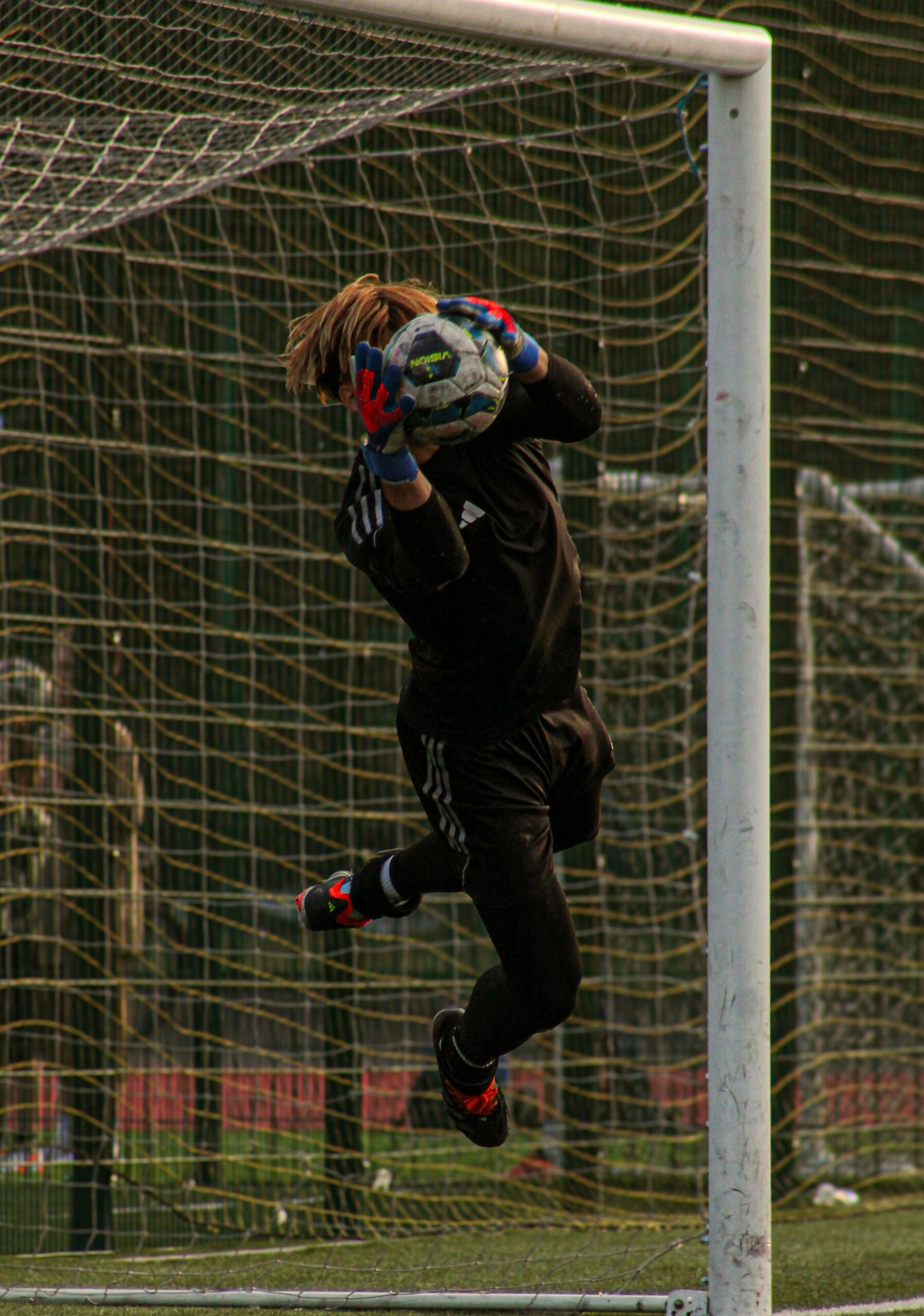
There is also a difference between a single-kick probability and a team outcome. A team can miss once and still win if the opponent misses more. A goalkeeper does not need to save every shot; one save at the right time can swing the whole contest. That is why shootouts often feel unfair to the losing side. The match may have been balanced over 120 minutes, but the final decision depends on a small number of high-pressure trials.
Why “Seventy-Eight Percent” Still Means Real Uncertainty
Penalty kicks are usually favorable to the shooter, but favorable does not mean automatic. A 2025 research preprint analyzing 7,872 penalty kicks reported an average conversion rate of 77.9 percent in its dataset, with players putting the ball on target 93.5 percent of the time. Those numbers are not a universal law for every league, player, or tournament, but they give a useful sense of scale. Most penalties are scored, yet misses and saves are common enough to decide trophies.
The difference between “likely” and “certain” is the heart of probability. If a kicker scores four out of five penalties over a long career, that player is excellent. In a shootout, however, one miss can become the moment everyone remembers. Small samples are noisy. A player who usually scores can miss once, and a goalkeeper who rarely saves penalties can guess correctly at the perfect moment.
That is also why fans sometimes overread a single result. If a team loses a shootout, it does not prove the team was worse at soccer overall. If a goalkeeper saves two kicks, it does not prove the goalkeeper can reliably stop most penalties. The shootout is a decision method, not a complete measurement of team quality. It answers one question only: who handled this particular sequence better?
The Goalkeeper and Kicker Are Playing a Guessing Game
A penalty kick is not just a test of shooting accuracy. It is a strategic contest. The kicker can aim left, right, high, low, or near the center. The goalkeeper can dive early, wait longer, lean one way, or try to read the kicker’s run-up. Because the ball travels so quickly from 12 yards away, a goalkeeper often cannot wait until the shot is fully clear. That forces guessing, and guessing creates strategy.
If a kicker always shoots to the same corner, the goalkeeper can learn the pattern. If a goalkeeper always dives to one side, the kicker can use that information. Over time, the best strategy is often mixed: a player must be predictable enough to stay accurate but unpredictable enough to keep the goalkeeper uncertain. That is one reason penalty practice is not only about striking the ball cleanly. It is also about repeatable routines, body control, and disguising intention without losing technique.
This is where game theory enters the picture. Each player’s best choice depends partly on what the other player expects. A powerful shot to the corner may be hard to stop, but it also has a higher risk of missing the goal if the angle is too fine. A safer shot near the middle may work beautifully if the goalkeeper dives, but it can look terrible if the goalkeeper stays. The “right” choice is not fixed. It depends on skill, habits, pressure, and the opponent’s expectations.
Pressure Changes the Human Side of the Math
Probability models can describe what tends to happen, but they cannot fully capture what it feels like to walk from midfield to the penalty mark. The kicker has time to think. The goalkeeper can delay slightly within the rules, move along the line, or make the goal feel smaller through body language. The crowd reacts before the ball is even placed. A routine training-ground shot becomes a public test of composure.
Pressure can change decisions. A player may choose a safer placement instead of a harder corner. A goalkeeper may dive dramatically because doing nothing after a goal can look passive, even when standing near the center might sometimes be sensible. The psychology of action matters: people often prefer doing something visible over waiting, especially when everyone is watching.
Good teams prepare for that pressure before it arrives. They practice penalty routines after tiring drills, decide likely kickers in advance, and study opposing goalkeepers. None of that removes uncertainty. It simply improves the conditions around each choice. Preparation turns a frightening moment into a familiar pattern: breathe, place the ball, choose the plan, strike cleanly, accept the result.
What Shootouts Teach Beyond Soccer
Penalty shootouts are memorable because they turn a team sport into a sequence of individual decisions. But the same ideas appear far beyond soccer. A medical test with a high accuracy rate can still produce wrong results. A strong investment can still have a bad year. A student who usually performs well can make a mistake on one question. Probability helps explain why outcomes can be both skill-influenced and uncertain.
The lesson is not that anything can happen, so nothing can be understood. The lesson is sharper: good probabilities describe tendencies, not guarantees. A 78 percent chance is powerful over many attempts, but fragile in one moment. A strategy can be smart even when it fails, and a risky choice can succeed without being wise every time.
That is what makes the shootout so compelling. It is not merely random, and it is not perfectly fair as a measure of the whole match. It is a pressure chamber where rules, skill, preparation, and chance meet in a form everyone can follow. By the time the ball hits the net or a goalkeeper’s gloves, the math has already been working quietly in the background.






Add comment